

Generally speaking, local history museums in Tokyo’s special wards are not considered must-see attractions, either for tourists or locals. That doesn’t mean that they’re not worth visiting, of course, and many of them are either free or cheap to enter, if small in scale compared to the national museums in Ueno Park.
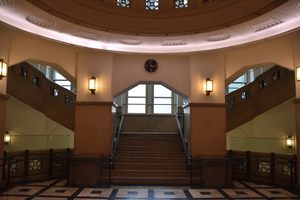
Minato City’s local history museum, on the other hand, is a gem worth seeing even just from the outside. Housed in a grand, castle-like seven-story estate built in Uchida-Gothic style, it served as the headquarters of the Institute of Public Health from 1938 to 2002, founded and funded by the Rockefeller Foundation to rejuvenate the disaster-stricken city from the aftermath of the 1923 Great Kantō earthquake.
Having survived air raids and subsequent earthquakes, the building is a breathtaking work of architecture, from its elegant hallways to the stunning lecture hall, a fascinating look at academic life in 20th-century Tokyo.
While the building itself is museum-like, with several rooms and floors open for visitors to explore as they like, it also has a number of galleries detailing the history of Minato City, from prehistory to the modern day. Its permanent collection includes locally found artifacts and preserved sections of notable shell middens in the area, as well as a skeletal specimen of a whale and ancient pottery that visitors are encouraged to touch.
0 comments:
Post a Comment